


Natural Sciences - Materials Science
Wageningen researchers break through material theory with new type of plastic
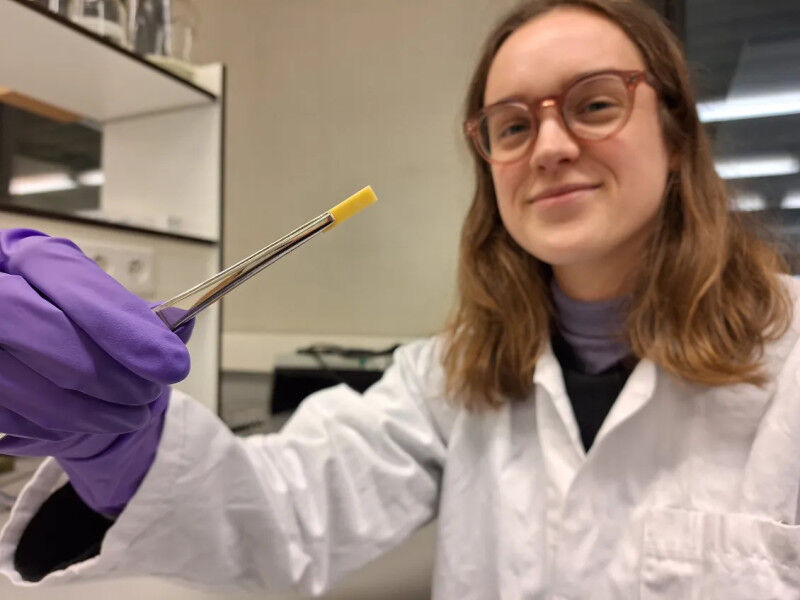
Researchers at Wageningen University & Research have developed a new type of plastic that could not exist according to materials theory.
How biobased materials slow down climate change
Trees and plants store carbon. In biobased materials that are made from wood and plant fibres, the carbon remains sequestered for longer. That impact was previously difficult to quantify, but research by Wageningen Food & Biobased Research has changed that.
STAR interview: reshaping tomorrow through additive manufacturing of energy materials
In this STAR interview, we speak to Davoud Jafari of the Faculty of Engineering Technology (ET). STAR is an acronym for (S)ituation, (T)asks, (A)ctions, (R)esults. We also have many "star" colleagues at UT with interesting stories to tell.
Three TU Delft projects funded for battery development
The Dutch Research Council (NWO) and the National Growth Fund programme Battery Competence Cluster NL (BCC-NL) are awarding nearly 14.5 million euros to three projects for the Call -Technology development for circular batteries-. This enables a major step forward in making batteries more sustainable. The TU Delft scientists Shoshan Abrahami, Marnix Wagemaker and David Vermaas are involved in all projects.
Wageningen researchers break materials theory with a new type of plastic
Researchers at Wageningen University & Research have developed a new type of plastic that, according to materials theory, should not be able to exist. Its properties sit somewhere between those of glass and plastic: it is easy to (re)shape, yet resistant to impact.
UT leads €8 million national sodium-ion battery research
From electric trucks, buses, ships and industrial machinery to stationary energy storage for the electricity grid: sodium-ion batteries could play an important role in making large-scale energy storage more sustainable and less dependent on scarce raw materials. This week, the
Controlling quantum states in germanene
Researchers at the University of Twente and Utrecht University demonstrated for the first time that quantum states in the ultra-narrow material germanene can be switched on and off using only an electric field. The researchers were able to vary the electric field strength very precisely, causing the special 'topological' states in nanoribbons to disappear or appear.
Selected Jobs
Group Leader: Superconducting Materials For Quantum Technologies Delft University of Technology
PhD Position in Colloidal Assembly for Nanostructured Lithium-Ion Batteries Utrecht University
2 PhD’s in JUST MATTER. Situated Material Engagement for Climate Justice Utrecht University


