


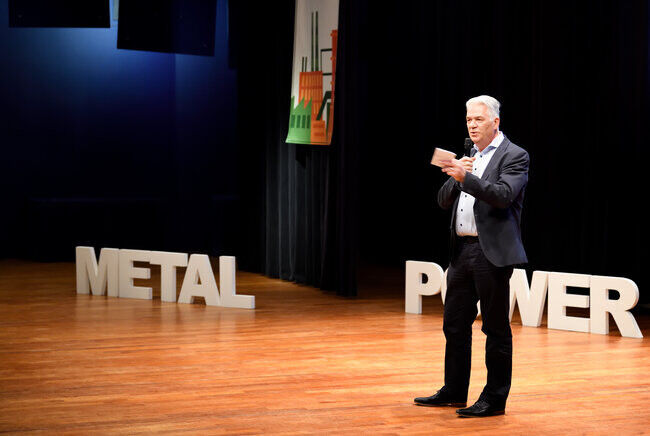
Just before leaving the university, Philip de Goey and his colleagues signed a cooperation agreement with the Ministry of Climate Policy and Green Growth for research and application of metal fuels.
Philip de Goey - the professor who put iron powder on the map as a circular fuel - is rounding off his scientific career. After a long academic career, marked by many hundreds of scientific publications and nearly three terms as dean of the Department of Mechanical Engineering, he supervised the graduation of his final PhD candidate last week. His departure is also a new beginning. The Ministry of Climate and Green Growth will structurally collaborate with a platform of parties around Metalot, which brings together various partners, including TU/e, TNO, RIFT, IRON+, and numerous other startups, companies, and universities, all’of which work on utilizing metal as a fuel.
Philip de Goey ’s career at TU/e began with his PhD at the Department of Applied Physics, where he researched spin-polarized hydrogen gas as a quantum gas, which he completed in 1988. He then went to work as an assistant professor at the Department of Mechanical Engineering and has remained there ever since. He has even been dean of the faculty for an unusual eleven years, almost three terms (one or two is the norm).
Throughout the years, since 1988, his focus has been on research into flames and their properties to support a broad industrial network. Important research for all kinds of combustion technology. You will find them in gas stoves, your boiler, and your car, as well as in industrial applications where a lot of heat or power is needed. The better you understand what is happening in a flame, the cleaner and more economical the device, whether large or small, can function.
The power of metal
Yet this impressive academic legacy is not the most remarkable thing De Goey has done in his career. About fifteen years ago, during a search for green and sustainable fuels, he became involved in a study to burn metal powder in zero-gravity conditions. And that got him thinking.
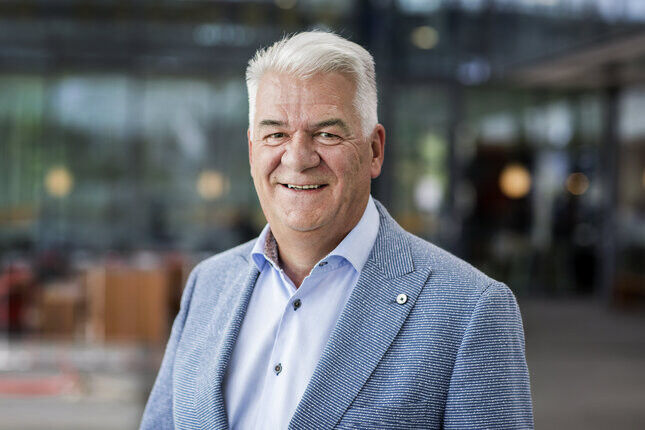
"What if we could store green energy in iron powder for a longer period of time? That is easier to store and transport than hydrogen, which is also being investigated as an alternative to fossil fuels," explains De Goey.
"Actually, you can use the iron powder exactly as we now use fossil fuels. We transport them, store them, and use them only when and where needed and after capturing the rust powder, we use green hydrogen to produce iron powder again. And this can be repeated over and over. And that can certainly be done just as safely and easily with iron or other metals as with crude oil."
Student teams and research
De Goey: "Because this idea did not let go of me, I focused entirely on researching and developing iron powder as a fuel from 2014 onwards. I was one of the founders of the student team SOLID, carried out several large-scale research projects, and trained many PhD students. Meanwhile, the Metal Power ecosystem in the Brainport region has grown enormously."
Several successful startups, such as RIFT and IRON+ have emerged from the research projects conducted. TNO is engaged in application-oriented research into metal fuels.
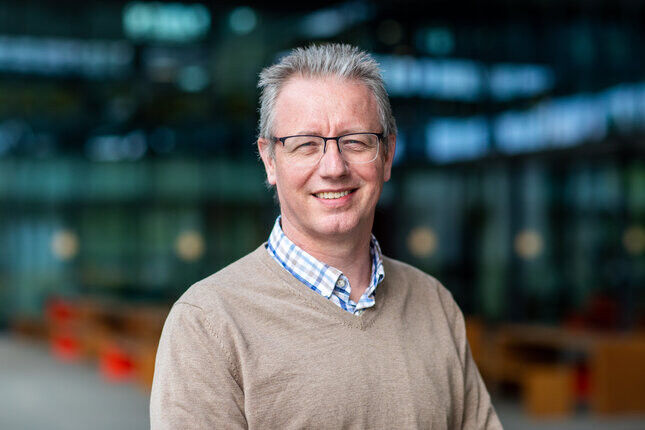
At TU/e, about fifteen permanent staff are now working on research into metal as a fuel, including Roy Hermanns , who is now taking over from De Goey as the driving force behind metal as an energy carrier at TU/e. In this role, he is dedicated to advancing the Metal Power technology, acting as the inside-out lead to drive collaboration and innovation in this field.
Since 2015, a platform has been established where all these parties collaborate on the development and marketing of metal fuels: Metalot. De Goey is also at the cradle and at the helm there. "With Metalot, we offer a platform to support research, further development, and ultimately commercialization of metal fuels."
Growing green
De Goey and his colleagues are not the only ones who believe that metal fuels can be a part of the solution in greening the industry. The Ministry of Climate and Green Growth is also showing serious interest in the further development of this technology. "The ministry is an important player for us to support the global integration of the metal fuels into our energy system," explains de Goey.
"We now also have a standard petrol that you can fill up with throughout Europe. For example, we will also have to get standards for certain metal powders as fuel. Then we will all be working towards the same, interchangeable technology in Europe."
"Only then can we exchange powders from factory to factory, and from every supplier. As a joint platform we can together indicate very specifically which standardized technology has to be supported."
Research in good hands
Hermanns agrees. "You see that the Ministry of Education, Culture and Science is more committed to direct applicability than a Ministry of Education, Culture and Science, which basically funds academic research. But they can coexist. At TU/e, we will continue to be fully engaged in our fundamental research for the technology of the future."
At the symposium in honor of the retirement of Philip de Goey, he received the signed Letter of Support from the Ministry of Climate Policy and Green Growth to work more intensively with Metalot and all partners on the further development of metal powder fuels.
In addition, the ministry will also push for the preconditions in Europe to enable the globalization of these metal fuels. This is in addition to the efforts of TU/e in Europe, where EIRES Metal Fuels has also been designated as the Focus Area for the EU Action Plan.
The EU is certainly interested in this. This is a technology where Europe has the opportunity to put itself on the map as the global market leader, now that it has been overtaken by China and the US in the field of solar panels and electric vehicles. In this way, we work together to promote the independence and competitiveness of Europe and its industry.
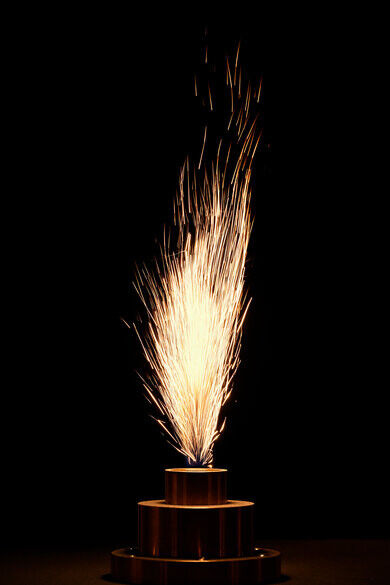
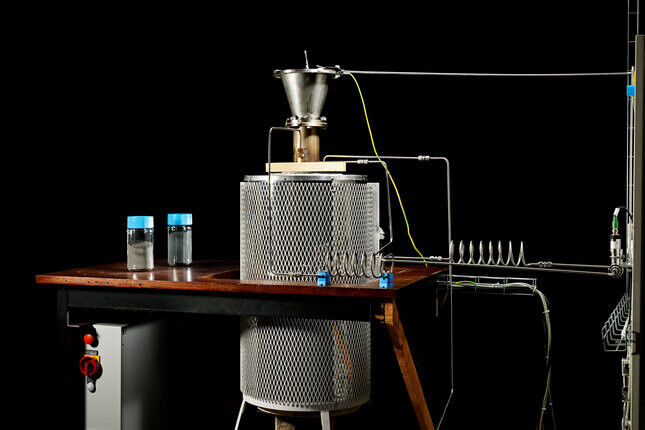
Setup for burning metal fuels. Photo: Bart van Overbeeke
"Moreover, we expect that there are still plenty of scientific questions to be answered before metal fuels become commonplace in the industry," Hermanns continues. "But that’s why the proximity of our ecosystem with TU/e, TNO, startups, and government is so important. Fortunately, we also work well with other research teams in, for example, Darmstadt in Germany, but also outside Europe with the Canadian team at McGill university, among others."
"But we have something that they don’t have, and that is the Brainport ecosystem," adds De Goey. "All that Brainport knowledge about how to work together in an ecosystem with knowledge institutes, government, and industry is invaluable. I sometimes call our future energy campus in Maarheeze, an old location of Philips Lighting, Brainport South."
Time to pass the torch
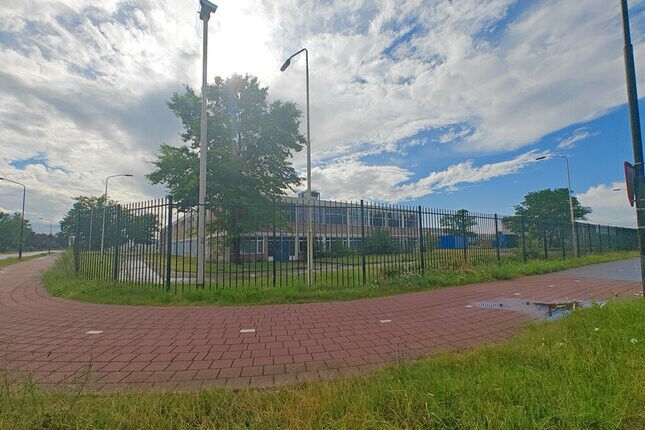
It is certain that at that location, there is room to form a campus with interested players who focus on metal fuels. Expansion into other energy technologies is also very welcome, which could easily make the location the energy technology campus of the Brainport region. In the new year, De Goey and his colleagues will receive the key to the only old Philips building, the new Metalot Future Energy Lab, which will still be there.
When asked what role he still wants to play there, De Goey answers cautiously. "You know, I’m really looking forward to not being ruled by my diary anymore. And I leave TU/e with a very good feeling, where the good research on this theme will continue."
"In any case, I’m going to make more time for my family. Not in the least because I will soon be a grandfather for the first time. That doesn’t mean I’m no longer involved with Metalot, but rather at my pace and under my conditions. I think that would be wonderful, to really just be able to work on what I think is important, in addition to enjoying the peace and quiet," concludes De Goey with a twinkle in his eyes.
Europe faces significant challenges in the coming years regarding its ability to innovate, sustain economic growth, maintain sovereignty, and ensure welfare. More than ever, education, research, and innovation are considered the key success factors for a future stable and prosperous Europe.
TU/e aims to contribute to Europe’s success by working with strategic partners in Europe and actively participating in European policymaking by providing feedback and joining in relevant discussions. Additionally, TU/e will actively participate in European research programs.
Through partnerships with world-leading academic and industrial partners, TU/e aims to increase the resilience and competitiveness of the region and Europe.
Photo: Bart van Overbeeke