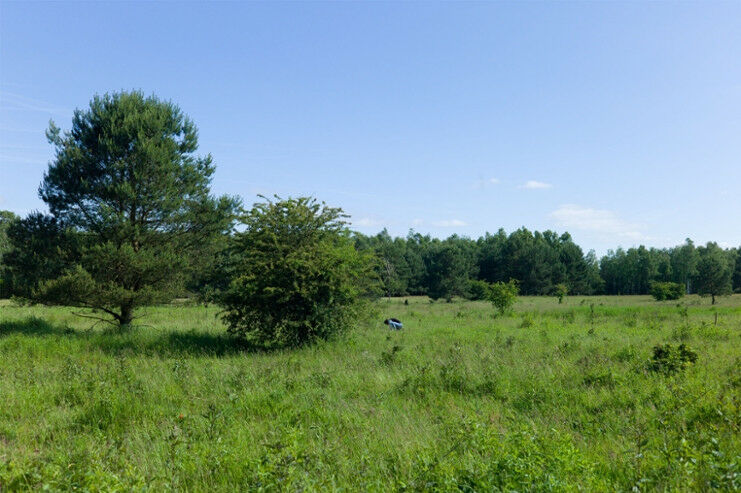
Ecosystem restoration on former agricultural fields on the Veluwe, the Netherlands. Picture: Co Morriën.
Ecosystem restoration on former agricultural fields on the Veluwe, the Netherlands. Picture: Co Morriën. How can we best protect the Earth's biodiversity and ecosystems? Long-term ecosystem restoration strategies should be looking more closely at the complexity of ecosystems, including species interactions and evolution, says an international group of scientists, including UvA soil ecologist Elly Morriën, in the renowned scientific journal Nature Ecology & Evolution. The degradation of natural ecosystems caused by human activity has outpaced ecosystem-restoration efforts in recent decades, turning ecosystem recovery into a global priority. Hoping to advance restoration science in its efforts to help the environment, an international research team headed by David Moreno Mateos from Harvard University, put forward their ideas in the new paper. Good indicator of success. In the paper, the scientists argue that interactions among species and their potential to evolve, rather than sheer numbers, are fundamental factors in designing ecosystem recovery strategies.
TO READ THIS ARTICLE, CREATE YOUR ACCOUNT
And extend your reading, free of charge and with no commitment.