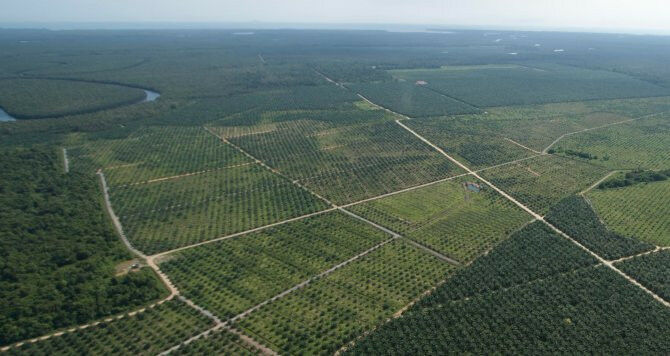
Plantations of oil palm, rubber, Acacia and other trees have expanded rapidly into former orangutan habitat, although this expansion has now slowed down (credits: HUTAN)
Plantations of oil palm, rubber, Acacia and other trees have expanded rapidly into former orangutan habitat, although this expansion has now slowed down (credits: HUTAN) - A new study by 33 orangutan experts from around the globe, amongst others professor Douglas Sheil, assessed what would happen to Bornean orangutans in the next decade under different management assumptions. The good news is that the researchers predict that if orangutan killing and habitat loss were stopped that orangutan populations could rebound and reach 148% of their current size by 2122. So, there is hope. Ever since modern humans walked into the orangutan range on the Asian mainland some 80,000 years ago, the species has been persecuted. Starting with bow and arrow, then blow pipes and ultimately shot guns, people have hunted orangutans. Unsustainable killing played a major role in the orangutan's extinction from southern China, Thailand, Vietnam, Cambodia, the Malay Peninsula, the island of Java and also various parts of Borneo and Sumatra where the species is absent. People also started to convert the orangutan's forest home into agriculture and plantations, neither of which provide the apes with good habitat.
TO READ THIS ARTICLE, CREATE YOUR ACCOUNT
And extend your reading, free of charge and with no commitment.