


news
Environment
Results 181 - 200 of 213.
Life Sciences - Environment - 12.09.2022

In recent years, biologists have discovered an astounding diversity of all kinds of microorganisms: bacteria, archaea, eukaryotes and viruses. Using this information, multiple scientific teams have tried to delineate our evolutionary past. By studying our microbial relatives, we can better understand our own origins and the complex ecological communities of which they are part.
Environment - 09.09.2022
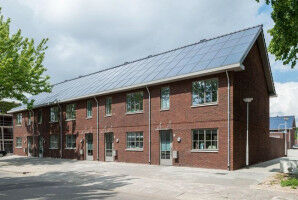
TU/e researcher tested the performance of solar panels in real-life by looking at 256 identical residential PV systems all across the Netherlands. The need to switch to renewable energy sources such as wind and solar has never been more urgent. As the gas tap is slowly turned off, electricity becomes more and more expensive, and the effects of the warming climate are becoming painfully visible, more and more people are acquiring solar panels.
Life Sciences - Environment - 09.09.2022

"Maybe one day we can produce cell-based proteins on a rooftop in a city," says Julia Keppler from the Laboratory of Food Process Engineering. This lab looks into milk proteins made by cells instead of cows. Over the next four years, she and her colleagues will be taking major steps on this new path in the protein transition.
Chemistry - Environment - 09.09.2022
Ammonia: ’a trump card for the energy transition process’
During his internship as a Chemical Technology student at Danish company Haldor Topsøe, UT PhD researcher Kevin Rouwenhorst realised the many opportunities offered by ammonia. At the moment, it is principally used to manufacture artificial fertiliser and therefore has a bad name. But ammonia is also one of seven chemicals that form the basis of all chemical products, and it helps to feed around 50% of the world's population.
Environment - Life Sciences - 08.09.2022

Tiny Forests form an excellent solution to drought and heat stress in urban areas. Research by Wageningen Environmental Research shows that temperatures in a Tiny Forest may be as much as 20 degrees below those in the streets. Moreover, the mini forests store much water during heavy precipitation, which is sorely needed in the increasingly dry Netherlands.
Environment - Earth Sciences - 08.09.2022

They hit the headlines almost daily in the summer: major wildfires that reduce thousands of hectares to ashes.
Environment - 07.09.2022

"Better safe than sorry": Plants anticipate potential heatwaves by already slowing down pollen development under mild heat conditions, concludes Stuart Jansma in his PhD research project. This "overreaction" on the part of plants has negative effects on fruit and seed harvests when the weather is warm.
Environment - 06.09.2022

For the first time, scientists from the University of Amsterdam and a Spanish university have developed a method to quickly determine the exposure of people to pesticides via the analysis of wastewater. The researchers published their work in the scientific journal Chemosphere this Summer. The analysis of sewage water and application of wastewater-based epidemiology is already done for drugs such as cocaine and for viruses such as covid-19.
Environment - 02.09.2022
Reducing energy bills with a serious game
Gamification can lead to lasting behaviour changes. That is the conclusion of a recent PhD study by Jan Dirk Fijnheer at Utrecht University. Households that played his game Powersaver Game saved up to 30 percent more energy than households that used an energy-savings app without game elements. Fijnheer will defend his dissertation on Wednesday, 7 September 2022.
Environment - 01.09.2022

Although it sounds weird, it is true: the steppes of Eastern Europe are home to a similar number of plant species as the regions of the Amazon rainforest. This is only seen when species are counted in small sampling areas rather than hectares of land. An international research team led by Martin Luther University Halle-Wittenberg (MLU) and the German Centre for Integrative Biodiversity Research (iDiv) Halle-Jena-Leipzig has now demonstrated how much estimates of plant diversity change when the sampling area ranges from a few square metres to hectares.
Life Sciences - Environment - 01.09.2022

"Maybe one day we can produce cell-based proteins on a rooftop in a city," says Julia Keppler from the Laboratory of Food Process Engineering. This lab looks into milk proteins made by cells instead of cows. Over the next four years, she and her colleagues will be taking major steps on this new path in the protein transition.
Health - Environment - 31.08.2022
Involve behavioural experts sooner for a healthy lifestyle
Healthy lifestyle campaigns are often unsuccessful. It is hard to get people to eat healthily or do more exercise. Expertise on behaviour should be included at a much earlier stage in policy development, say twelve behavioural scientists in a position paper. They will present the paper to Maarten van Ooijen (State Secretary for Health, Welfare and Sport) on 31 August.
Environment - 31.08.2022
Nightmare scenarios for climate change
The opening of the academic year on 5 September is themed planetary boundaries. But, what are they? How can you study them, and can you use them in your day-to-day life? Today, episode 3: Marten Scheffer, one of the speakers during the opening. Marten Scheffer , professor of Aquatic Ecology, has been working on critical boundaries for some time.
Environment - 22.08.2022
Measurement campaign maps GHG emissions and air pollution in Rotterdam
Scientists from TU Delft, together with scientists from other research institutions, will investigate how the reduction of urban greenhouse gas emissions and air pollution can best be monitored with atmospheric measurements. Monday, August 22, the measurement campaign will start in the Rotterdam region.
Health - Environment - 18.08.2022
La Vuelta air not always healthy
The Netherlands is preparing for La Vuelta Holanda which starts on Friday 19 August. How clean is the air in the places that the peloton is visiting? Researchers from Utrecht University have mapped the annual average air quality of each stage of La Vuelta and demonstrate that the air is most polluted at the start (Utrecht) and finish (Madrid).
Environment - Health - 16.08.2022
Blue sky thinking - the hidden threat of fine particulate pollution
For three years in a row, Steffen Künn and colleagues went to a seven-week-long chess tournament in Cologne to establish a link between levels of air pollution and cognitive performance. The somewhat alarming results were eagerly scooped up by the media, but it took even more data to convince the academic community that air pollution might affect our economy.
Environment - 10.08.2022

Sponges are among the oldest creatures on Earth and play a key role in many underwater ecosystems. A new study by Niklas Kornder of the University of Amsterdam (UvA) and colleagues finds that sponges 'sneeze' to clear their water channels. With a sneeze the sponge releases a type of mucus that is eaten by other animals.
Environment - Life Sciences - 10.08.2022
How the eating habits of a limited group of Americans determine sustainability
Masses of hamburgers, steaks, cheese and a lot of eggs: Americans love their animal products. But researcher Oliver Taherzadeh discovered that only a relatively small group of high-volume consumers need to modify their diet to achieve an enormous environmental gain. The day on which we have used up all the biological resources that the Earth can regenerate in a year, Earth Overshoot Day, was this year 28 July.
Environment - 28.07.2022

The movement of elephants through wildlife corridors is directly impacted by differing forms of human pressures and development, new research by Elephants Without Borders (EWB) and Radboud University shows. Their study, published today in Frontiers in Conservation, is the first that takes an in-depth look at how varying land-use affects elephants and their use of wildlife corridors.
Career - Environment - 25.07.2022
Three UvA researchers receive Rubicon grants
Three UvA researchers who all recently obtained their doctorates have received Rubicons grant from NWO/ZonMw to conduct research at foreign research institutions. They are: chemist Eduard Bobylev, astronomer Ines Pastor Marazuela, and socio-cultural researcher Alex Thinius. For many researchers, professional experience abroad is an important step in their career.


Life Sciences - Mar 13
How the brain creates meaning: Martin Vinck investigates the key to thoughts, attention and consciousness
How the brain creates meaning: Martin Vinck investigates the key to thoughts, attention and consciousness
Environment - Mar 12
Turning dairy emissions into opportunities: how climate finance can drive climate-smart dairy
Turning dairy emissions into opportunities: how climate finance can drive climate-smart dairy