


news 2026
« BACK
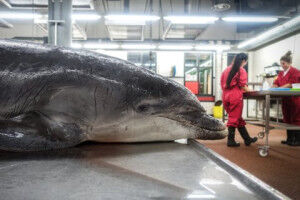 Gray seals don’t just bite porpoises: new study shows first damage in dolphins
 Why some women spontaneously have twins
Life Sciences
Results 1 - 14 of 14.
Environment - Life Sciences - 13.03.2026
Multi-year field study provides insight into environmental effects of offshore solar energy
A four-year study in the Dutch part of the North Sea shows that a small-scale offshore solar farm did not cause measurable changes in currents and water mixing. At the same time, multiple species settled on the floating installations within a short period of time, including mussels, barnacles and other small marine animals.
Life Sciences - Environment - 12.03.2026
Less protein, less nitrogen: what does that mean for methane?
Does feeding less protein over a longer period not only reduce nitrogen losses, but also affect methane emissions? Researchers at Wageningen University & Research (WUR) investigated this in a multi-year study with dairy cows, funded by the Vereniging Diervoederonderzoek Nederland (VDN), LVVN and the Melkveefonds.
Life Sciences - 09.03.2026
Paternal mitochondria turn out to be less rare than thought
Mitochondria in plants can be inherited from the father more often than expected. The findings come from Wageningen University & Research (WUR), the Max Planck Institute of Molecular Plant Physiology (MPIMP) and The Chinese University of Hong Kong (CUHK). The study was recently published in Nature Plants.
Life Sciences - Chemistry - 05.03.2026
Microbial ancestor of complex life was more sophisticated than previously thought
The molecular building blocks that make up the cells of humans, animals and plants so sophisticated appear to be older than scientists previously assumed. They were already present in our single-celled ancestor that lived 2.5 billion years ago. That is the conclusion of Wageningen and American researchers in two studies published in Nature and Nature Microbiology.
Life Sciences - 26.02.2026
Early interactions between siblings shape social skills
Photo: Jaime Culebras How young animals interact with their siblings during their first months of life determines their social skills later on. This is shown by experimental research on the tropical freshwater fish Neolamprologus pulcher, published in PNAS. Not only does the number of siblings matter, but whether they can interact freely with one another does too.
Environment - Life Sciences - 26.02.2026
Wolves
"Behavioural research can show how wolves try to navigate a human-dominated landscape." Highlight After more than 150 years of absence, the wolf has re-established itself in the Netherlands. This raises questions about nature, safety, livestock farming and living together with wild animals. Wageningen University & Research (WUR) is at the heart of that social and scientific conversation, with years of expertise in wolf ecology, monitoring and human-animal interactions.
Life Sciences - Agronomy & Food Science - 25.02.2026
Maize defence compound helps parasitic nematodes find their host
A compound that maize plants use to defend themselves against pests can unintentionally help parasitic nematodes locate their host. This is shown by new research accepted for publication in Nature Plants. The key lies not with the plant or the nematode alone, but in a subtle interaction with soil bacteria.
Health - Life Sciences - 25.02.2026
First case of avian influenza antibodies in cow in Europe
Avian influenza (Avian influenza, HPAI H5N1) has been detected in a Dutch dairy cow. Research by Wageningen Bioveterinary Research (part of Wageningen University & Research) shows that the cow in question has antibodies against the avian influenza virus. No virus particles were found in the animal. This means the cow is not shedding the virus and does not pose a risk to public health.
Life Sciences - 25.02.2026
How do plants achieve their remarkable regular arrangement of leaves and flowers?
How do plants achieve their remarkably regular arrangement of leaves and flowers? And why does this pattern remain so stable, even as plants grow and respond to their environment? Researchers at Wageningen University & Research and the Dutch fruit and vegetable breeding company Rijk Zwaan have identified the biological mechanisms that underpin this precision.
Health - Life Sciences - 12.02.2026
Researchers from Utrecht University and partners from the United Kingdom have found evidence for the first time that gray seals can also injure dolphin species. Until now, such interactions were known almost exclusively in porpoises. The study, published today in the scientific journal Diseases of Aquatic Organisms, shows that gray seals may have a broader impact on small cetaceans in the North Sea than previously thought.
History & Archeology - Life Sciences - 11.02.2026
Research contributes to new insights into prehistory of Rhine–Meuse region
Recent genetic research sheds new light on the prehistoric population of the Rhine-Meuse region. The study shows that demographic developments in this area differed significantly from patterns observed elsewhere in Europe. Researchers from Vrije Universiteit Amsterdam contributed through isotope analysis that provides insight into individual life histories and mobility.
Life Sciences - 10.02.2026
Everyone unconsciously adapts their communication for children - including autistic adults
When you talk to a child as an adult, you unconsciously change the way you speak. It is often thought that such adjustments are more difficult for autistic people, but new research shows that this group is initially just as good at it as their non-autistic peers. However, while neurotypical participants gradually adjust these changes during a conversation based on new signals, autistic participants stick to their initial assessment.
Life Sciences - Health - 15.01.2026
Fundamental concerns about widely used method for mapping brain disorders
A popular technique for studying brain disorders, known as lesion network mapping (LNM), appears to have a fundamental limitation. This is the conclusion of neuroscientists from Vrije Universiteit Amsterdam and the University of Queensland (Australia) after an extensive analysis of more than 200 studies.
Life Sciences - Health - 04.01.2026
Why does one woman spontaneously conceive twins while another never does? That question is central to the of behavioral geneticist Nikki Hubers.


Advert